In November 2016, our CEO Diego Cresceri founded Creative Words. Ten years later, we asked him to walk us through the evolution of localization as he saw it from the inside: what has changed since then, and what has stayed the same.
What was the localization world like in 2016, when Creative Words was founded?
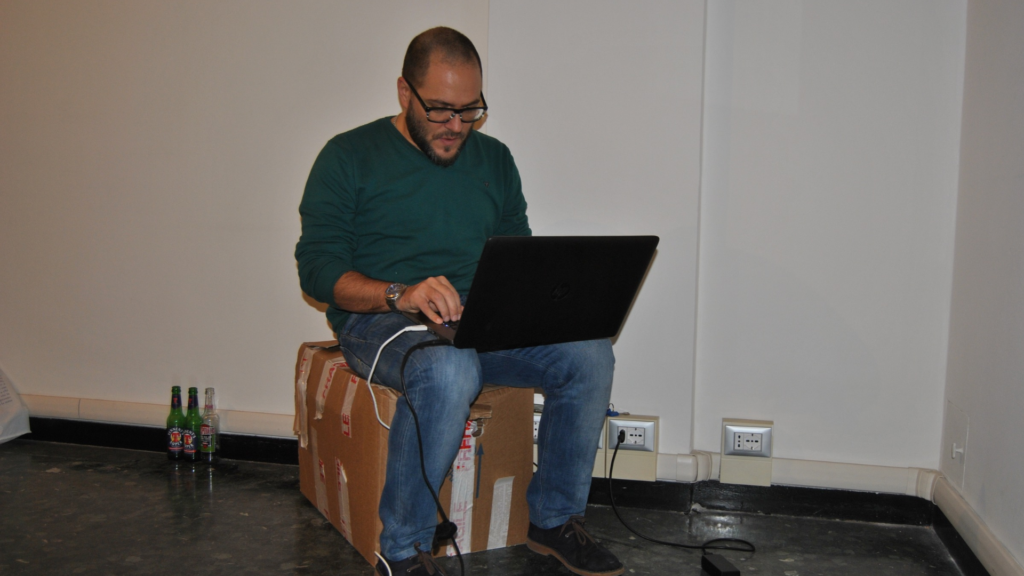
DC: I founded Creative Words in November 2016 in an empty room in Genoa. There was a laptop, a few boxes still to unpack, and me, on my own for the first three months. I answered emails, wrote quotes, managed projects, and in the evenings tried to figure out how to get the word out. Sometimes I translated and reviewed too.
Back then the work was very linear. A client sent a Word file or a PDF, often asking us to “translate it by Friday”. We loaded it into Trados or another CAT tool, used translation memories where we had them, assigned it to a translator, then a reviewer, and delivered it by email. Pricing was per word, and the most heated discussions with clients were about discounts on repetitions and fuzzy matches.
Machine translation was something you almost kept quiet about. Statistical MT produced sentences you could spot a mile away, and suggesting it to a client meant risking losing them.
If I had to pick one detail that shows how far we’ve come, it would be deadlines. Ten thousand words in a week felt like a demanding pace. Today, for some types of content, we handle the same volume in a day, and what clients mostly ask us is to guarantee that it’s accurate and on-brand.
When did you realize technology was going to really change this profession?
DC: Almost right away. In Creative Words’ first months, Google switched to neural machine translation. There was a lot of hype, but also a need to be much more careful during review: sentences were fluent and made sense, but the errors were subtler than before. That’s when I understood the problem had changed. Before, you could recognize machine output at a glance. Now it read well even when it was wrong.
We decided to take it seriously from the start. We built post-editing processes and were among the first in Italy to obtain ISO certification for machine translation post-editing. At the time it seemed like a gamble, but looking back, it was the training ground that prepared us for what came next.
Then generative AI arrived and changed the rules of the game. How did you approach it?
DC: I’ll be honest: at first I was scared. When ChatGPT took off in early 2023, I wondered whether what we did still made sense. On top of that, the tools changed every week and there was a lot of noise.
At some point we chose to study it closely instead of waiting for someone to tell us what to do with it. In 2023 we completed the merger with Creative AI and set up the Innovation Lab, a group of people whose job is to experiment, fail fast and find out what actually works on clients’ content.
That led to our own services and tools, such as re[words], our LLM-based translation and post-editing tool. We also launched an AI course designed for linguists, because we realized that technology on its own doesn’t do much if the people using it don’t know how to guide it.
How have client requests changed over the years?
DC: Ten years ago, clients asked us to translate a manual or a website. Today they ask us to help them manage multilingual content at volumes that would have been unthinkable in 2016: product catalogs, web content in dozens of languages, content that’s updated every day. They often bring us in before the content even exists, to work out how to set up their workflows.
The relationship has become more like consulting. We sit down with the client and decide together which content can go through an automated workflow with light review and which needs a professional from start to finish. AI lets us put people’s time where it really makes a difference.
The mistake I see most often is starting from the tool. A company buys a license, plugs in an engine and expects localization to be solved. Then it finds out that nobody has thought about terminology, that the source data is wrong or messy, and that nobody can say what level of quality each piece of content needs.
Is there anything that, despite everything, hasn’t changed?
DC: The fact that a language belongs to people. A text can be grammatically perfect and still sound off to a reader in France, Japan or Brazil. Noticing that takes cultural sensitivity and years of experience, and that’s not something you hand over to AI.
Language skills still matter enormously. In fact, today they’re needed at a higher level. To review machine-generated text well, you need to know the language better than someone writing it from scratch, because the errors are harder to spot.
And then there’s trust. A client sending their brand, their products, and sometimes their users’ safety into another market wants to know that someone has checked and is willing to stand behind it. That was true ten years ago and it will still be true ten years from now.
How do you see the industry ten years from now?
DC: I think the word “translation” will almost disappear from quotes. Some content will be born multilingual, generated and adapted automatically at the moment it’s created, and translation as a separate downstream step will remain for an ever smaller share of texts.
Language professionals will be the ones who decide what “quality” means for a given market, evaluate and correct the systems, and handle high-risk content: legal, medical, a brand’s voice. Companies like ours will look more and more like businesses that manage multilingual content and data.
I’d like to do this interview again in ten years and find out how many of these predictions were wrong. It would mean the industry kept surprising us, as it has so far.